New Storm Shelter Requirements for Arkansas Homes in 2026: What You Need to Know
News
5 Min Read
Arkansas updated its residential storm shelter guidelines in 2026, affecting new builds and retrofit installations across the state. Here's what Northwest Arkansas homeowners need to know about the new requirements, how they affect your existing home and any planned construction, and how Astoria Builders can help you stay compliant and protected.
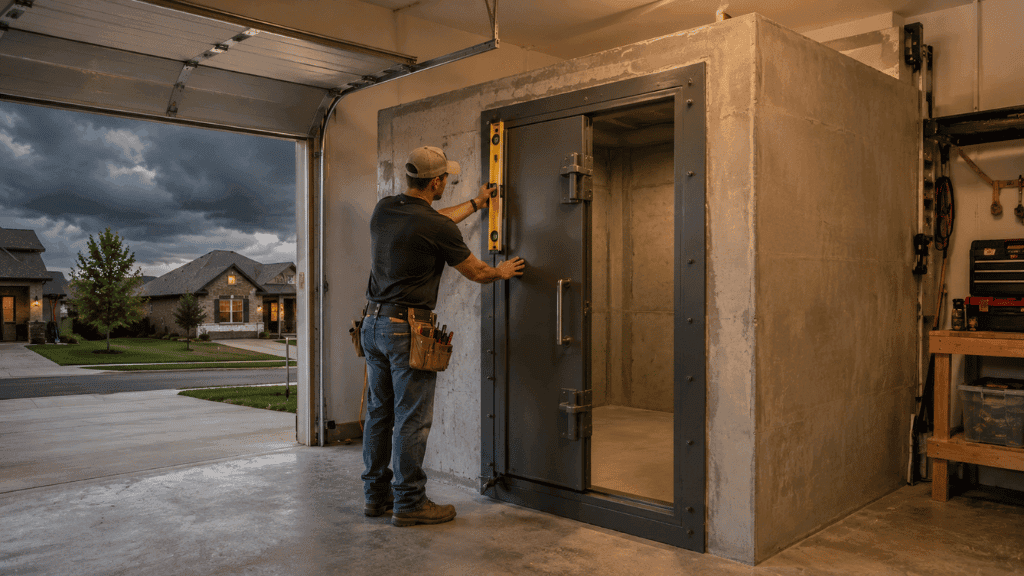

Storm shelter requirements for residential properties in Arkansas have been a topic of increasing attention in 2026 — driven by a combination of updated FEMA guidelines, growing awareness of tornado risk across Northwest Arkansas, and a surge in homeowners seeking to add safe rooms to existing properties. Here's what NWA homeowners need to know.
The Background: Why Requirements Are Changing
Arkansas sits in a region where tornado risk is real, documented, and increasing in public awareness. FEMA's P-320 standard — the benchmark for residential safe rooms and storm shelters — has been the national reference point for residential shelter installation for years. In 2026, updated guidance from both FEMA and Arkansas building authorities has clarified and in some cases strengthened the requirements for residential storm shelter installations — particularly for new construction and permitted retrofit installations.
The changes affect three categories of NWA homeowners in different ways.
New Construction
If you are building a new home in Northwest Arkansas in 2026, storm shelter provisions are increasingly being incorporated into local building requirements across the region. Some NWA municipalities are now actively encouraging or requiring storm shelter provisions in new residential construction — particularly in areas with documented tornado risk. If you are planning a new build, your builder should be discussing storm shelter options with you during the design phase — not as an afterthought after plans are finalised.
Retrofit Installations in Existing Homes
If you are adding a storm shelter or safe room to an existing home in NWA, the installation must meet FEMA P-320 standards to qualify for any available assistance programs and to be recognised as a compliant shelter by insurance providers and local authorities. Updated 2026 guidance has clarified the specific requirements for in-garage shelters, in-home safe rooms, and below-ground installations — including door rating standards, anchor requirements, and minimum interior dimensions.
A non-compliant installation — one that doesn't meet FEMA P-320 standards — provides uncertain protection and may not qualify for insurance recognition or assistance program funding. If you're investing in a storm shelter, investing in a compliant one is the only version worth doing.
Insurance Implications
An increasing number of Arkansas homeowners insurance providers are recognising FEMA P-320 compliant storm shelters in their policy terms — either through premium reductions, extended coverage provisions, or both. If your home has a compliant shelter installed, it is worth contacting your insurance provider to understand what recognition your policy provides. If your home does not have a compliant shelter, it is worth understanding what your policy covers in the event of a tornado loss.
FEMA Assistance Programs
FEMA's Hazard Mitigation Grant Program periodically makes funding available to homeowners for compliant storm shelter installations. Availability varies by state and disaster declaration status — but NWA homeowners who are considering a shelter installation should check current program availability before proceeding, as partial funding can significantly reduce out-of-pocket cost for a compliant installation.
What a Compliant Installation Looks Like
A FEMA P-320 compliant residential storm shelter or safe room in NWA in 2026 typically involves one of three installation types.
An in-garage below-slab shelter is the most common retrofit option for NWA homes with attached garages. A section of the garage slab is cut, a reinforced concrete or steel shelter unit is set into the excavated space, and the access door sits flush with the garage floor. These shelters are rated for EF5 tornado winds and provide the strongest level of protection available for residential installation.
An above-grade in-garage shelter is a steel shelter unit anchored to the existing garage slab. These are faster to install than below-slab units and work well in garages where below-slab installation is not practical due to soil or drainage conditions.
An in-home safe room is a reinforced room built within the existing footprint of the home — typically in a ground floor interior location. These are built with reinforced concrete or steel-framed walls, a FEMA-rated steel door, and a reinforced ceiling assembly. A well-built in-home saferoom can be finished to a residential standard inside and function as a usable room — pantry, closet, or utility room — when not needed for shelter.
Next Steps for NWA Homeowners
If your home does not currently have a FEMA P-320 compliant storm shelter or safe room, the right time to address that is before storm season — not during it and not after a tornado watch has been issued for your county.
At Astoria Builders, we design and install FEMA P-320 compliant storm shelters and safe rooms for NWA homeowners across Fayetteville, Bentonville, Rogers, Springdale, and surrounding communities. Every installation is permitted, inspected, and backed by our one-year workmanship warranty.
Get in touch to schedule a free home assessment and quote. We typically respond within one business day.

About Author
Edwin Vargas
Edwin Vargas is the founder of Astoria Builders, a licensed family-owned residential construction company serving Northwest Arkansas since 2009. Wit over 15 years of hands-on building experience across Fayetteville, Bentonville, Rogers, and Springdale, Edwin leads every project with a commitment to craftsmanship, transparency, and client satisfaction.
Similar Topic
